

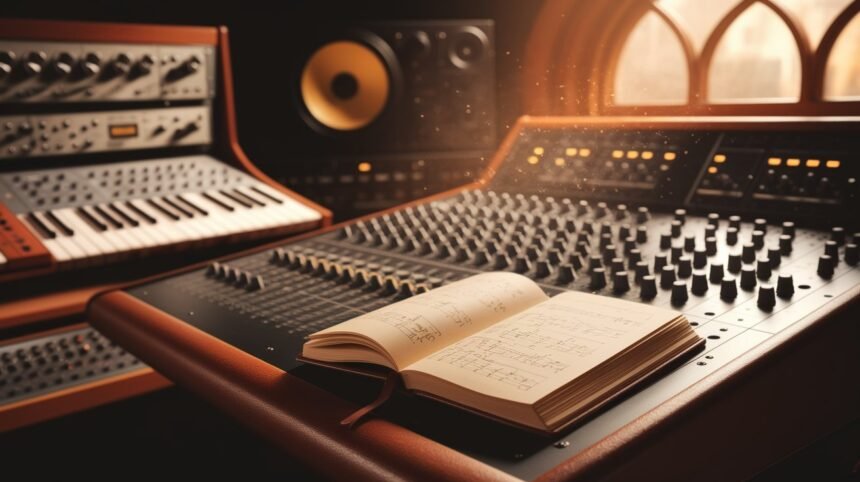
Producertech is a name associated with online education and resources for music producers, particularly people who want to improve their skills in electronic music production, sound design, mixing, mastering, and modern music-production workflows. In an industry where digital audio workstations, plugins, synthesizers, sampling, and home studios continue to evolve, platforms focused on practical production education can help beginners and experienced producers organize their learning. In 2026, searches for Producertech are relevant to anyone looking for structured tutorials, production courses, creative techniques, and ways to develop a more professional approach to making music.
The appeal of Producertech comes from its focus on practical music-production knowledge rather than simply explaining what individual tools do. Music production can involve dozens of interconnected skills, including arranging, recording, MIDI programming, synthesis, effects processing, automation, mixing, and mastering. A useful educational resource brings these areas together so producers can understand not only how to use a tool but also why and when to use it. This makes Producertech an interesting resource for people building their production skills from the ground up as well as producers looking to improve particular areas of their workflow.
Producertech and Music Production Education
Modern music production is much more accessible than it was in previous decades. A producer can create a complete track using a computer, an audio interface, headphones, a MIDI controller, and a digital audio workstation. However, accessibility does not automatically make production easy. Beginners often face a huge learning curve because software contains countless features, while professional-sounding music requires knowledge of both creative decisions and technical processes.
Producertech-style education can help address this problem by organizing complex concepts into understandable lessons. Instead of learning randomly from individual videos or experimenting without direction, students can follow a more structured path. Topics may include DAW workflows, synthesis, drum programming, arrangement, sound design, mixing, mastering, and genre-specific production techniques. This type of learning can save time because producers can focus on skills that directly affect their music instead of becoming overwhelmed by every available feature.
Another important advantage of structured education is repetition. Music production is a practical skill, and watching a tutorial once rarely makes someone an expert. Producers need to apply techniques repeatedly, experiment with different sounds, compare results, and eventually develop their own instincts. The best learning resources therefore encourage users to practice while learning, rather than treating music production as purely theoretical knowledge.
Key Skills You Can Develop With Producertech
One of the most valuable aspects of music-production education is that it covers multiple stages of the production process. Sound design is one major area. Learning synthesis helps producers understand oscillators, filters, envelopes, modulation, and effects, allowing them to create sounds instead of relying exclusively on preset libraries. This knowledge is especially useful in electronic genres where distinctive basses, leads, pads, percussion, and atmospheric textures can become important parts of an artist’s identity.
Arrangement and composition are equally important. A technically impressive sound does not automatically produce an engaging song. Producers need to understand how intros, breakdowns, drops, verses, choruses, transitions, and outros work together. Learning how to control energy throughout a track can transform a collection of loops into a complete musical production. Producertech can therefore be useful for people who understand individual production tools but struggle with turning ideas into finished tracks.
Mixing is another essential skill. A strong mix requires decisions about volume, EQ, compression, stereo placement, reverb, delay, dynamics, and frequency balance. Beginners often make the mistake of adding more plugins whenever something sounds wrong. A better approach is to identify the actual problem first and then choose the simplest appropriate solution. Educational material can help producers develop this analytical mindset.
Why Producertech Can Be Useful for Beginners and Experienced Producers
For beginners, the biggest benefit of a structured platform is direction. New producers can easily spend months jumping between unrelated tutorials without developing a complete understanding of production. A structured course can provide a progression from basic concepts toward more advanced techniques. Learning the fundamentals first makes later topics such as advanced synthesis, parallel processing, automation, and mastering much easier to understand.
Intermediate and advanced producers can benefit differently. Once someone understands the basics, the challenge often becomes improving efficiency and developing a recognizable sound. Advanced learning can introduce alternative workflows, creative processing methods, sophisticated sound-design approaches, and more professional mixing techniques. Producers may also discover techniques that encourage them to approach familiar tools in new ways.
Another benefit is workflow improvement. Speed matters in creative work, because a complicated technical process can interrupt inspiration. Producers who understand their DAW, templates, routing, shortcuts, effects chains, and instruments can spend more time making creative decisions. The goal is not simply to know more plugins; it is to become more confident in using the tools already available.
Producertech in 2026: Modern Production Trends
Music production continues to change rapidly in 2026, with artificial intelligence, advanced plugins, cloud collaboration, increasingly powerful computers, and sophisticated software becoming part of modern workflows. These technologies can make production faster, but fundamental skills remain important. Understanding composition, arrangement, sound selection, dynamics, frequency balance, and musical storytelling continues to matter regardless of how advanced the technology becomes.
AI-assisted tools can generate ideas, manipulate audio, assist with mixing, and accelerate repetitive tasks, but producers still need creative judgment. A generated sound or automated processing chain does not necessarily fit a particular song. The producer must decide whether something contributes to the track’s emotion, groove, clarity, and overall identity. This is why foundational education remains valuable even as production technology becomes more automated.
Another major trend is the continued growth of home studios and independent music production. Producers no longer need a traditional commercial studio to experiment with professional workflows. Affordable equipment and software allow musicians to record and produce from bedrooms, apartments, and small creative spaces. Educational platforms can help these independent producers understand how to get better results from the equipment they already own.
How to Get the Most From Producertech
Simply purchasing or accessing educational material is not enough to improve quickly. Producers should create a consistent learning routine. A practical approach is to select one topic, complete the relevant lessons, and immediately reproduce the demonstrated technique inside a personal project. For example, after learning a particular compression technique, a producer can apply it to drums, vocals, bass, or another suitable track and compare the results.
Taking notes can also be useful. Instead of attempting to remember every plugin setting, focus on the underlying principle. Ask questions such as: What problem is this technique solving? Why was this processing choice made? What happens when the settings change? Understanding these concepts allows producers to transfer knowledge from one plugin or DAW to another.
It is also important to avoid excessive dependence on presets and tutorial projects. Templates and presets can accelerate production, but producers should gradually experiment and create their own sounds. The long-term objective should be independence and creativity, where educational techniques become part of an individual’s personal workflow rather than something copied permanently from someone else.
Conclusion: Is Producertech Worth Exploring in 2026?
Producertech represents the broader value of structured online music-production education: helping producers transform complicated software and production concepts into practical skills. Whether someone is learning synthesis, arrangement, mixing, mastering, or general DAW workflow, organized education can provide a clearer path than randomly searching for disconnected tutorials.
In 2026, the music-production environment is more powerful and accessible than ever, but that also means there are more tools and techniques to learn. Producertech can be relevant for producers who want to build stronger fundamentals, improve their workflow, explore creative production methods, and move closer to producing finished, polished tracks. Ultimately, the most important factor is consistent practice. Learning a technique, applying it to real projects, experimenting, and developing your own creative style will always be more valuable than simply collecting tutorials.
Frequently Asked Questions About Producertech
What is Producertech?
Producertech is associated with online music-production education and resources designed to help producers learn areas such as DAW workflows, sound design, synthesis, arrangement, mixing, mastering, and electronic music production.
Is Producertech suitable for beginners?
Yes. Structured music-production education can be particularly helpful for beginners because it provides direction and helps them learn fundamental concepts in a logical order rather than jumping randomly between tutorials.
What can you learn from Producertech?
Depending on the available course or learning material, producers can develop skills related to sound design, synthesis, arrangement, mixing, mastering, electronic music production, and DAW workflows.
Can experienced producers benefit from Producertech?
Yes. Experienced producers can use advanced educational material to discover new techniques, improve workflow efficiency, explore creative processing methods, and develop a more distinctive production style.
Is music-production education still useful with AI tools in 2026?
Absolutely. AI can accelerate certain production tasks, but musical judgment, creativity, arrangement, sound selection, and critical listening remain essential. Understanding production fundamentals helps artists use new technology more effectively rather than relying on automation blindly.
What is the best way to learn music production?
The most effective approach combines structured learning with regular practice. Study one concept, recreate it in your own project, experiment with different settings, and gradually incorporate the technique into your personal workflow.



